
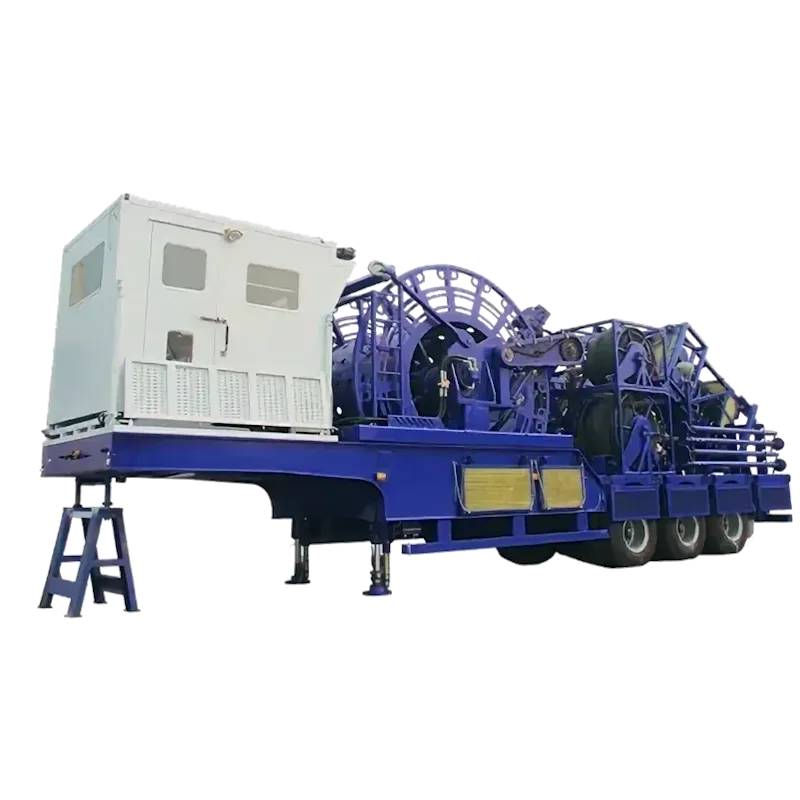
Continuous Pipe Equipment
Comprehensive, high-performance piping systems engineered for maximum operational reliability and efficiency.
A Pipeline Is More Than the Sum of Its Components
A pipeline is not a set of individually chosen parts placed end to end; it is a system that has to work together. Most leaks and premature failures originate not in the main components but in the connection and support details: a wrongly selected gasket, an unaccounted expansion, a missing anchor.
Four Details That Hold the System Together
Connection Type
Flanged, welded, threaded and clamped connections each imply a different maintenance scenario. At a point that must be dismantled frequently, a welded joint is cheap on day one and expensive for the rest of its life.
Thermal Expansion
Every line that changes temperature grows and contracts. If that movement is not absorbed by an expansion joint, an expansion loop or a suitable support arrangement, the force loads the equipment flanges.
Supports and Anchoring
When fixed anchors, sliding supports and guides are not laid out correctly, the line deforms under its own weight and thermal growth. On lines carrying vibration, the support arrangement deserves a separate review.
Insulation and Corrosion
Corrosion under insulation (CUI) is among the damage mechanisms discovered latest in a plant. Material and coating selection must be assessed together with operating temperature and external conditions.
Spares and Standardisation
Using components to different standards across projects inflates both stock holding and commissioning time. Wherever possible, simplifying the connection standard and gasket type makes life permanently easier for the maintenance team.
Share your line diagram, medium and temperature data, and we will define the right components and connection solution with you.